TIVERTON SAYS THE HUNT IS “NOT WELCOME” — A LOOK BACK AT YEARS OF LOCAL RESISTANCE
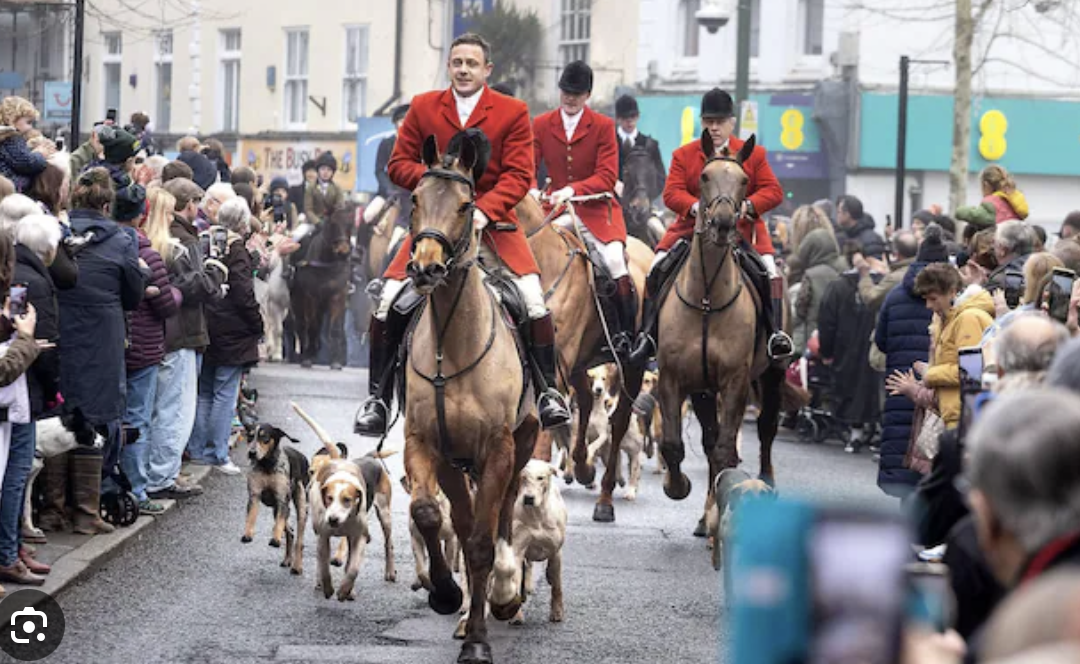
For years, Boxing Day in Tiverton has come with an unwelcome tradition: the annual visit of the Tiverton Foxhounds to the town centre. Local Independents for Tiverton (LIFT), representing residents’ wishes, have repeatedly raised concerns over the disruption, risks, and public health issues associated with allowing a hunt meet to take place in the heart of the town.
Until recently, these objections were routinely dismissed. But on 17 November 2025, Tiverton Town Council made a landmark decision—voting to inform the Hunt that they are “not welcome” in the town on Boxing Day.
This vote came after years of unanswered questions, avoidable risks, and silence from those who had the power to act.
LONG-STANDING CONCERNS
LIFT have been seeking answers and making challenges of Town, District and County Councils (as well as Government) for several years now.
Unregulated public gatherings
The Hunt’s arrival has traditionally been treated as an informal “custom”, leading to gatherings without any meaningful oversight. Horses and hounds occupied public spaces, large crowds formed, and roads were often obstructed, one way systems and pedestrian zones ignored—yet no formal event management process was required, despite the clear risks.
Other community groups holding much smaller events were required to complete paperwork, hire stewards, evidence their insurance policies and carry out risk assessments. The Hunt, meanwhile, operated with none of the usual scrutiny. LIFT argued—correctly—that this double standard placed both residents and animals at risk.
Health and safety issues around hounds
LIFT and local campaigners repeatedly highlighted the health risks posed by encouraging children to pet hunt hounds, who are not pets, not kept in homes, and not fed sterile pet foods. Hounds can carry parasites and pathogens that require proper hygiene facilities to avoid passing diseases on to children. In 2024 on Boxing day a sample taken from the hounds, was positive for Salmonella Indiana.
Hand sanitiser, even if provided at all, is wholly inadequate for dealing with parasite eggs.
Ambiguity about permission
Perhaps the most significant concern raised by LIFT was the implication that the Hunt’s presence was officially sanctioned, by the Town, District and County Councils.
Even when councils do not explicitly invite hunts, failing to declare a position allows hunts to claim legitimacy simply by showing up.
This “implied endorsement” matters enormously to hunts—and it was precisely this ambiguity that LIFT sought to challenge, on behalf of residents who are offended by the Town’s name and space being used each year.
HOW LIFT TRIED TO CHANGE THINGS
Over multiple years, LIFT challenged the meet. They raised formal questions to Tiverton Town Council Councillors.
They asked for:
- clarity on whether the Hunt had permission to gather,
- recognition that the event required proper regulation,
- consideration of animal welfare and public health issues,
- and a public statement distancing the Council from the Hunt.
Each time, responses fell short. The council often argued that enforcement was a matter for Mid Devon District Council or the police, and avoided taking a clear position of its own.
This reluctance allowed the status quo to continue unchallenged—until 2025.
WHAT CHANGED IN 2025
When Tiverton Town Council finally voted to declare the Hunt “not welcome”, it was a dramatic shift in tone and confidence.
The decision followed increased public scrutiny of trail hunting nationwide, renewed concerns about hound behaviour, and growing pressure on town councils to clarify their stance rather than relying on procedural ambiguity.
For the first time, Tiverton publicly stated what LIFT had been arguing all along:
A hunt meet is not an innocent tradition—it is a high-risk gathering that a town has every right to refuse.
Hunting organisations reacted with predictable hostility. Their sensitivity reveals how essential the appearance of council support is to them. They may still turn up without it—but the symbolic endorsement matters.
Tiverton’s decision showed that councils can, in fact, withdraw that symbolic permission.
WHY THIS MATTERS
The implications extend far beyond Tiverton.
Councils across the region have historically tip-toed around the issue, fearing backlash or assuming they lack the authority to speak. Tiverton has now demonstrated that:
- Councils can express a position.
- Councils do not have to allow hunts to use town centres as PR stages.
- Community concerns must be taken seriously.
At its core, the question is simple:
Should a council allow its public spaces to be used to promote an activity widely linked with trespass, animal welfare concerns, and breaches of hunting regulations?
Tiverton Town Council has finally answered: No.
THE WORK IS NOT OVER
LIFT’s persistence over many years created the conditions for this change. Their efforts show the value of local action, evidence-gathering, and refusal to accept the argument that “nothing can be done”.
But while Tiverton has taken a stand, not every town has followed suit. Many councils still avoid making a public statement, allowing hunts to maintain the fiction of municipal approval.
As Tiverton has now shown, clarity is possible—and powerful.
The next step is ensuring more councils are willing to show the same leadership.

I call on MDDC, to whom I pay my council tax, to act.
Shouldn’t these dogs be wearing collars with tags and be chipped?
Only yesterday, I saw a pack of these hunting dogs rampaging in a wood near Tiverton with no- one seen or heard in attendance all day to supervise what they did.
I have to keep my own pet dogs on leads in the vicinity of livestock.