

Hare Hunting
What is Hare Hunting?
Since the Hunting Act 2004, hare hunting is illegal – yet this doesn’t stop hare hunting going on, with many packs hunting 3 times a week. Basically, it is a glorified form of hare coursing – just like hare coursing, dogs are set to find hares and chase them; just like hare hunting there are spectators. The only difference is that there is no gambling involved.
Hare hunting season runs from late August to mid-March.
Hares are hunted with beagle packs (on foot), harrier packs (on horseback) or basset hound packs (on foot). These packs will also prepare their hounds for hare hunting by hunting leverets (baby hares) early in the season. As of 2023, there are currently around 45 beagle packs, 5 basset packs and 15 harrier packs.
Hares don’t like to leave their territory so a hare hunt may only cover a couple of miles or so. But there is always the possibility of finding other har3es in the area to chase. During the chase, the hare will be faster than the hounds but it will not have the stamina to keep going over a long period and will eventually be caught and killed.
Hare hunts are “regulated” by the Association of Masters of Harriers and Beagles (AMHB), who claim they enforce strict hunting rules and conduct kennel inspections – they obviously are not doing their job properly as East and West Kent Hunt Sabs exposed the filthy living conditions of the Bolebroke Beagles in Kent in 2023.
Hare hunts are also very secretive. They have very little social media or internet presence, which makes gathering intel on them or finding them difficult. They usually meet in remote locations, such as farm buildings or pubs, far away from the public. The hunt usually starts around midday.
There is a Master, Huntsman and Whipper-in, whose roles are the same as that for fox hunts, plus the followers and supporters.
Hares don’t go to ground as such but may be flushed out if they shelter in drains or other places of cover, and re-hunted. The hare’s brown coat enables it to blend in with the ground and it may lay in a form (a shallow scrape in the ground) until a hound is almost upon it, and then shoot off. They don’t like to go on to fresh ground or ground they don’t know and so may run in a wide circle. Hare scent originates from between the toes, and pregnant hares carry little scent.
The Huntsman will encourage the hounds with voice and horn. The hare will use manure etc to spoil its scent and will jink, making a sharp leap to the side. If a hare is lost, the hounds will be re-cast. Supporters will usually raise their hat or arm to indicate if they’ve seen a hare.
Beagles have a lot of stamina and are fast. They often run off, losing the hunt members, until they cannot be seen in the distance. During that time, of course, they are under no human control and may well kill out of sight.
A Few Hare Facts
- Hare scent comes from between the toes and this can be confused by roads, other animals and humans. Pregnant hares carry little scent.
- Hares are also good swimmers and will swim across rivers or ditches in the hope of getting away from the hunt.
- They are game animals but some farmers regard them as pests because they can damage cereal crops.
- Hares feed mainly at night and rest during the day.
- Unlike rabbits, hares do not build warrens
- They are mainly solitary animals although a few may live near to each other and form small collectives when foraging
- Hares scream when distressed or caught
- Adult hares normally live 3 – 4 years
- Hares breed February to September, producing 3 or 4 litters of 3 or 4 leverets
Hare Shooting Season
Brown hares are a quarry species which may be legally controlled during the open season, but is protected in the closed season under the Wildlife and Countryside Act 1981 (as amended). The closed season for brown hare is 1 February – 30 September. It is an offence to intentionally or recklessly kill, injure or take a brown hare in its closed season without a licence. It is also an offence to possess or control, sell or offer for sale, or transport for the purpose of sale any living or dead brown hare (or rabbit), or any derivative of such an animal, which has been killed without a legal right to do so.
Adult hares normally live to 3 or 4 years but very rarely can live much longer.
Breed Feb to Sept. Can produce 3 or 4 litters of 3 or 4 leverets
Brown hare numbers have declined since the 1960s.
Differences between hares and rabbits:
Rabbits – brown eyes; hares – amber
Rabbits – shorter ears; hares are taller with black tips
Rabbits usually hop, hares tend to walk
Rabbits are smaller with shorter limbs
Legal Protection for Hares
The Hunting Act 2004
The Act creates five offences:
- Hunting a wild mammal with a dog section 1;
- Permitting land to be used for hunting a wild mammal with a dog section 3(1);
- Permitting a dog to be used for hunting a wild mammal with a dog section 3(2);
- Participating in, attending, facilitating or permitting land to be used for the purposes of a hare-coursing event section 5(1); and
- Entering/permitting/handling a dog in a hare-coursing event section 5(2).
The law allows them to be killed both as a game species and to prevent serious damage to farm crops. This specifies that any killing or control must be undertaken by competent people who are aware of their responsibilities as game shooters or as pest controllers. Any killing or control must always be carried out in strict accordance with the law.
Ground Game Act 1880
Brown hares are defined as ‘ground game’ by the Ground Game Act 1880. This Act gives a statutory right to every occupier of land to take or kill ground game; this right may be shared with other persons, such as the holder of the sporting rights.
Subject to certain conditions, the occupier may also authorise others to control hares, but only they and one other authorised person may use a firearm.
This means that every occupier (farming tenant) retains the right to kill hares whether or not they hold shooting rights
Game Act 1831.
Brown hares are defined as ‘game’ by the Game Act 1831. This Act prohibits the shooting of game species on Sundays and Christmas Day.
Hare Preservation Act 1892
This Act makes it an offence to sell, or expose for sale, any hare or leveret between the months of March and July inclusive. This prohibition removes any commercial incentive to kill hares during the main breeding season but does not apply to imported hares.
What to do if you see a hare hunt in progress
Call 999 and say you are reporting hare coursing under Operation Galileo. Operation Galileo is a national police operation tackling hare coursing and poaching.
To download this as a PDF, please click here: HARE HUNTING
Hare Coursing
What is Hare Coursing?
Hare coursing is a cruel and illegal blood sport in which mainly lurchers and salukis are released to chase and catch hares, often live-streamed for gambling purposes. It is most common from late summer when the crops are cut through to spring when crops are grown enough to provide hares with sufficient cover.
Why is Hare Coursing Cruel?
- Hares are wild animals and are naturally fearful of dogs. When chased by dogs, hares experience immense stress and fear.
- The dogs used in hare coursing are often trained to attack and kill the hares. Even if the hare is not killed, it will likely suffer serious injuries, including broken bones, internal injuries, and shock. Most hares, though, will eventually be killed by the dogs and their bodies thrown into ditches or by the roadside. Coursing enthusiasts have claimed that hares die instantaneously from the bite of one dog. However, hares are often unsuccessfully grabbed several times by the dogs – causing terrible injuries and stress. Witnesses have described hearing the hares screaming in pain, as they become part of a brutal tug of war between dogs.
- Hare coursing often takes place at night, when hares are most active. This means that the hares are more vulnerable to being attacked and have less chance of escape.
Hare Coursing also Involves Other Crimes
Hare coursing often involves the committing of other crimes:
- The vehicles used are often untaxed or uninsured, or are unfit for road use. Dangerous driving is also an issue.
- Trespass: the hare coursers are trespassing on farmland
- Criminal damage and theft: plus other farm equipment damage/theft and damage to farm gates
- Violence towards farmers or others who approach the coursers
- Gambling: there is much money to be made from hare coursing. Coursing is even livestreamed to gamblers in countries as far afield as China. Bets are placed, for example, on how often a dog turns the hare, or whether the hare will escape.
- Hare coursers are often serious criminals involved in other criminal activity and are often armed
- Hare coursers often commit their crimes in other counties from where they live.
- The dogs are also often cruelly treated or abandoned
Hare Coursing and the Law
Hare coursing is covered under the following Acts:
Section 30 Game Act 1831
This creates offences in relation to trespassing during the day in search of game (hare is classified as game), depending on the number of people involved (an offence involving five or more people carries a higher fine).
Any offence that is committed at night must be prosecuted under Section 1 Night Poaching Act 1828 (see below).
It is most important to note that there is no requirement under this Act for anything to be actually chased or caught for the offence to be committed. Trespassing on land to look for something to chase is sufficient.
Section 1 Night Poaching Act 1828
Only deals with offences committed at night. Two separate offences:
- The first provides that it is an offence if, by night, a person “unlawfully” enters onto land (i.e. trespasses) and takes or destroys game
- The second one provides that it is an offence if, by night, a person is “unlawfully” on land with a “gun, net engine or other instrument” for the purposes of “taking or destroying any game”.
Section 5 Hunting Act 2004
This outlaws hare coursing and contains wider provisions than those relating to hunting wild mammals. The offence is precisely drawn but some confusion may arise where ‘illegal hare coursers’ are prosecuted. Such persons are trespassers and commit an offence under the Game Act 1831. Where trespass to land is an ingredient of the activity said to constitute an offence under section 1 or section 5 HA 2004, it will generally be easier to continue to prosecute under the Game Acts. However, this section does not encompass what might be described as hare coursing that is recreational, it requires proof of a competition. Section 5 HA 2004 will clearly capture large, well organised hare coursing events, such as the old Waterloo Cup. It is much less easy to prove in other circumstances unless there is strong supporting evidence of competitive elements such as betting on the outcome.
Section 5 also provides that a person commits an offence if they:
- participate in a hare coursing event;
- attend a hare coursing event;
- knowingly facilitate a hare coursing event; or
- permit land which belongs to them to be used for the purposes of a hare coursing event.
The Police, Crime, Sentencing and Courts Act 2022, Section 63 and Section 64
This Act created two new offences of trespass with intent to pursue hares and being equipped to search for or pursue hares.
The offence of trespassing with intent to pursue hares (s.63) is committed where the trespasser intends to use a dog to pursue or search for hares, or to facilitate another doing so or to enable another person to observe that activity.
The offence of being equipped to search or pursue hares (s.64) when a person has with them (other than when in a dwelling) an article with the intention that they or another will use it to commit any offence under s.63.To download this as a PDF, please click here Explanation of hare coursing
What can we do about it?
What Can We Do About It?
- Report any sightings of hare coursing to the police – call 101 or 999 if coursing is taking place live. DO NOT approach these men, they are extremely dangerous and violent. Your local police rural crime team may also have a way you can report anonymously if you prefer. When reporting, to save time, make sure you have the exact location handy What 3 Words is great for this or a map grid reference.
- You can also report what you saw to Action Against Harehunting (AAH). Use this form – we can help you.
- Support organisations that are working to end hare coursing.
- Educate others about the cruelty of hare coursing. Talk to your friends, family, and neighbours about the issue and encourage them to report any sightings of hare coursing. Share hare coursing incidents/prosecutions on your social media pages to further inform people that this crime is still taking place.
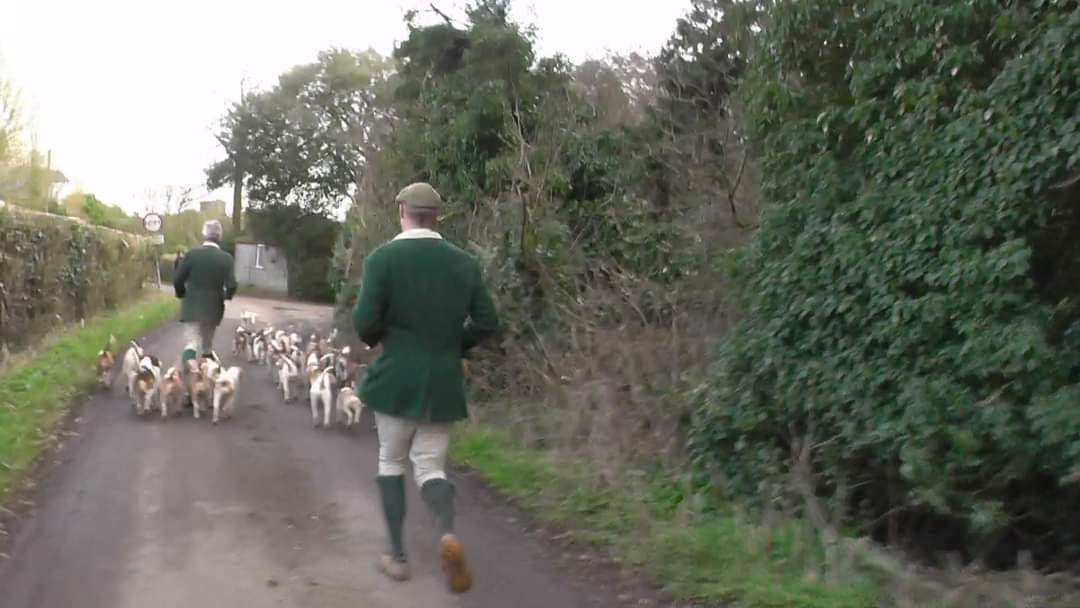
Taking the beagles hunting
Old-fashioned apparel, green jackets, long socks
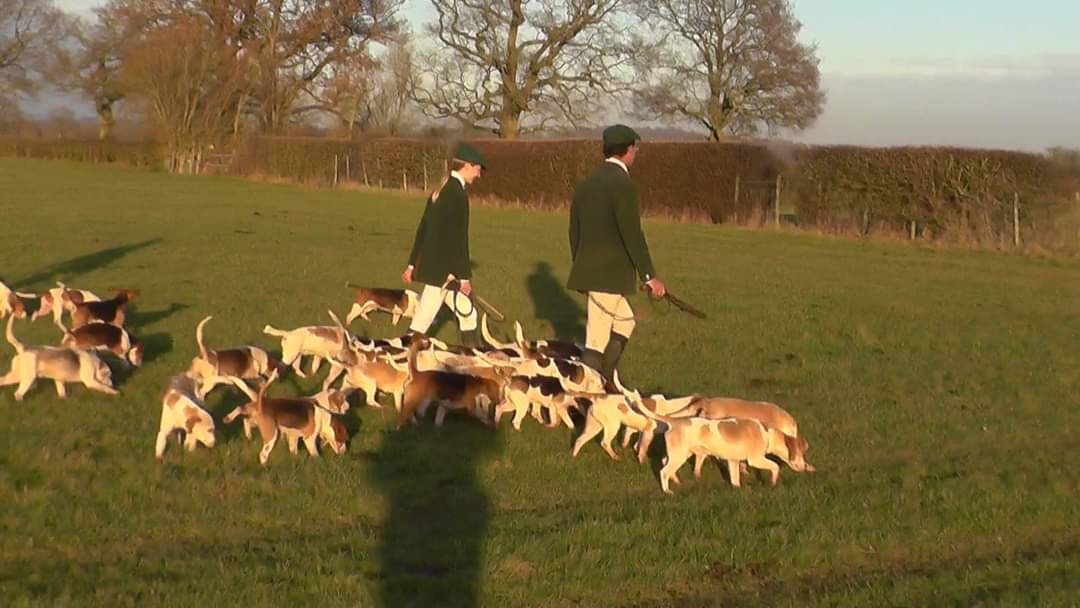
Looking for hares to hunt
Hare Hunters often wear green jackets

Beagles in the van
Beagles are smaller and faster than fox hounds
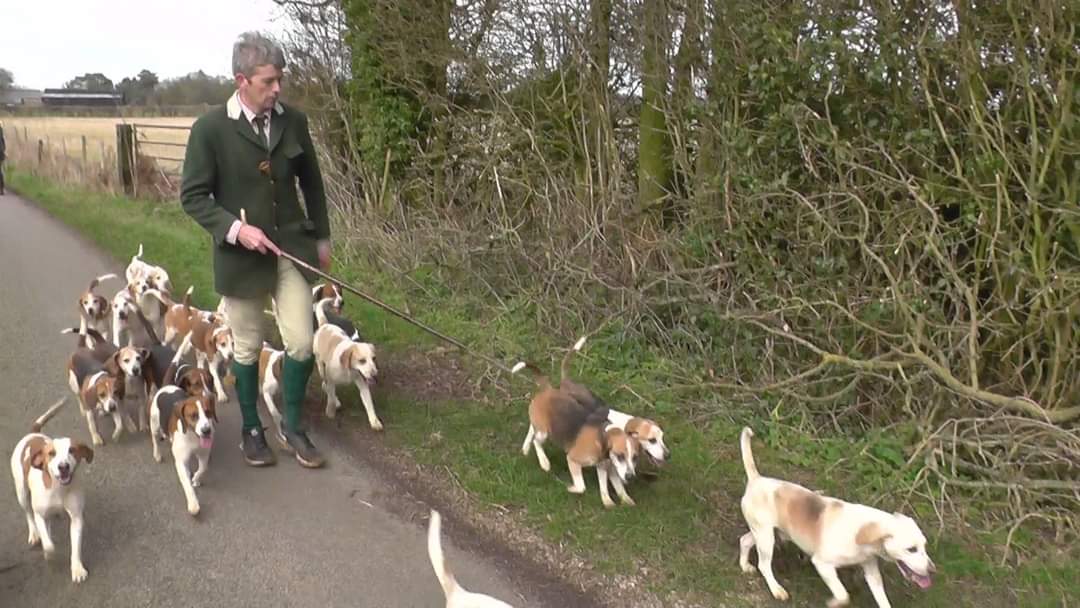
Hare hunting, with beagles
Hare hunters are usually on foot, with beagles


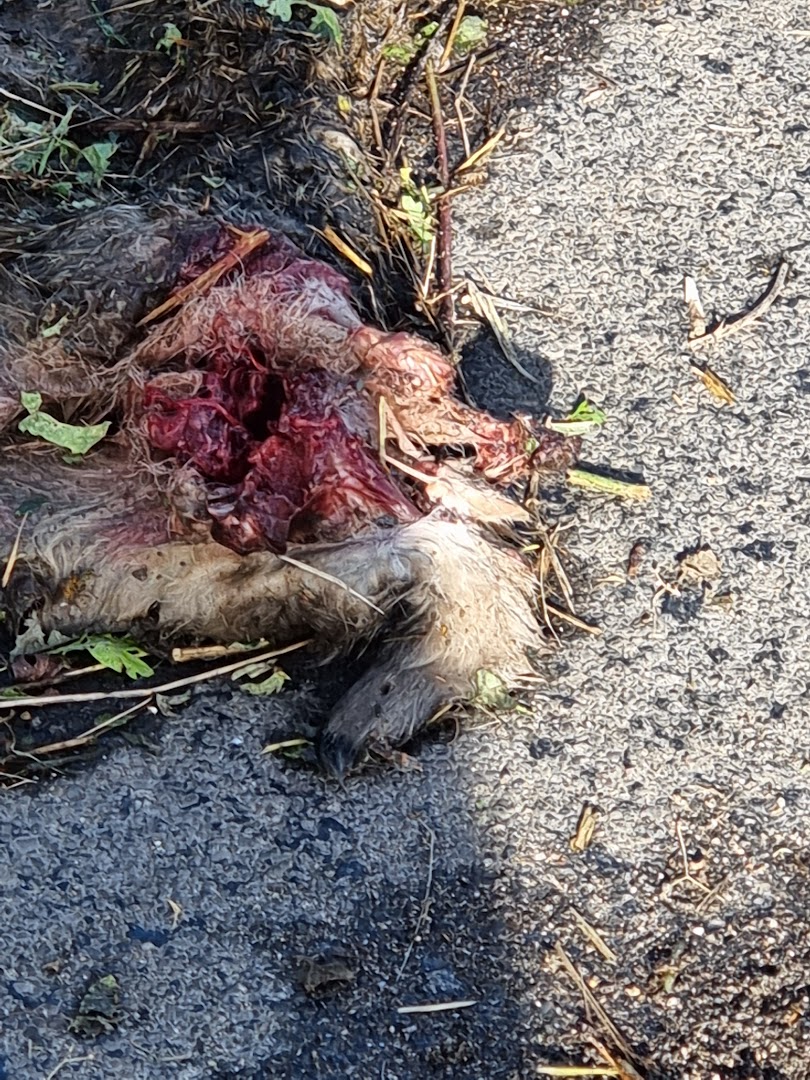
A hunted hare
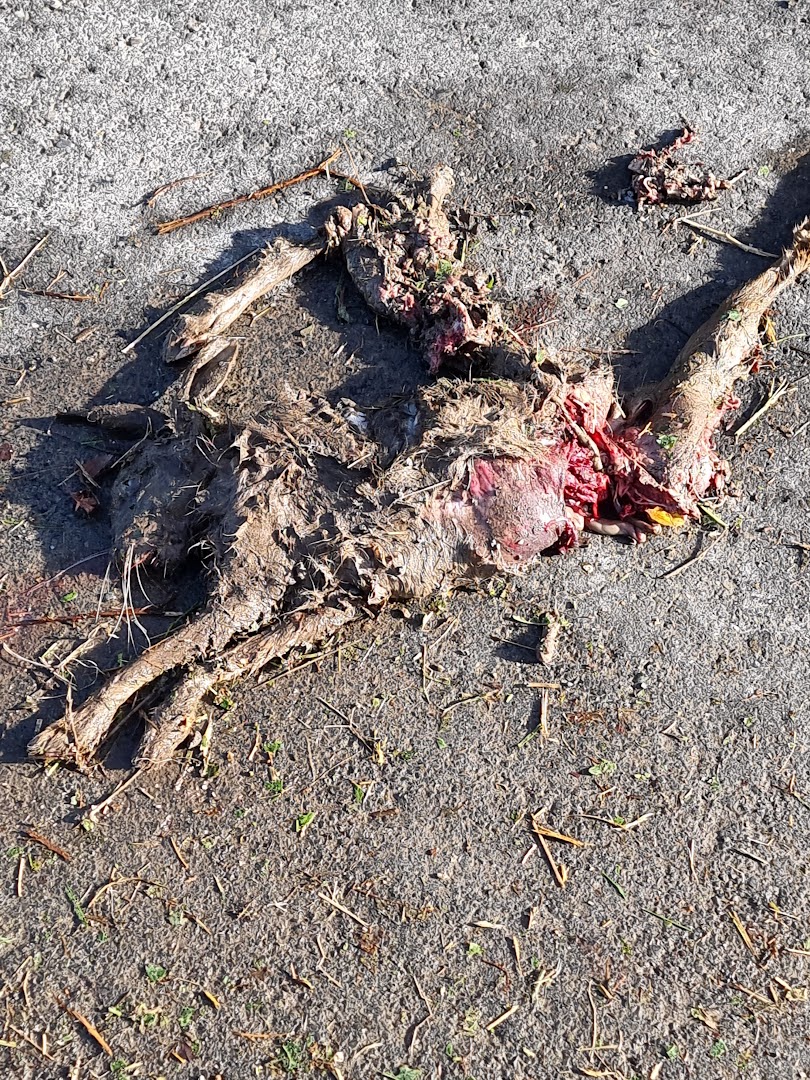
Hunted hare
